
Almost every traveler arrives with the same mental image: standing on a dune ridge while the sun melts into the Sahara. What most people don't realize until they're there is that they'll get two of these moments on any overnight tour — sunset on the evening you arrive, and sunrise the next morning before the drive back. Both are included. Both are worth getting up for. But they are not the same experience, and travelers tend to love one far more than the other depending on what they came for.
When each one actually happens on the route
On our 3-day itinerary, you reach the dunes in the late afternoon. Camels first, camp after, and then — as the heat drops — everyone walks up the ridge behind camp for sunset. Dinner, fire, night in camp (here's what that night actually involves), and then the guide knocks on tent flaps about forty minutes before sunrise. Breakfast, sandboarding, and the drive back follow.
The exact clock times shift a lot with the season — roughly a 19:30 sunset and 06:00 sunrise in summer, sliding to a 17:30 sunset and 07:45 sunrise in midwinter. That difference matters more than people expect: a winter sunset happens before dinner, while a summer one lands right at the relaxed end of the evening. Our best-time-of-year guide breaks the seasons down.
The honest comparison
| Sunset | Sunrise | |
|---|---|---|
| The light | Deep orange, long shadows, the classic postcard | Softer and pinker, with the dunes in near-silhouette |
| The crowd | Everyone from camp — a shared, social moment | A handful of early risers; often nobody in sight |
| The sand | Footprints everywhere from the day | Wiped clean by wind overnight — untouched dunes |
| Temperature | Pleasant, the day's heat finally gone | Surprisingly cold, near freezing in winter |
| What it asks of you | Nothing — you're already up | An alarm, and a warm layer |
Sunset: the shared one
Sunset at Erg Chebbi is the moment the whole camp climbs the ridge together. The light is more dramatic — deeper orange, heavier shadows — and there's a real energy to it: couples taking photos, guides pointing out the Algerian border in the haze, kids (and plenty of adults) racing down the steep face afterward. If you want the classic Sahara memory with people in it, this is it.
It also asks nothing of you. You arrive straight from the camels, the hard part of the day is done, and the ridge is a two-minute walk from camp.
Sunrise: the quiet one
Sunrise is the opposite mood entirely. The camp is nearly silent, the air is cold enough to see your breath for part of the year, and the dunes have been wiped smooth overnight — none of yesterday's footprints, no camel tracks except the ones you make. Most travelers who make the effort describe it as the more personal of the two: it feels less like a show and more like being handed the desert for a few minutes.
The trade-off is real, though. It's an early knock on the tent, it's cold until the sun clears the horizon, and the window is short — the 4x4s leave not long after breakfast.
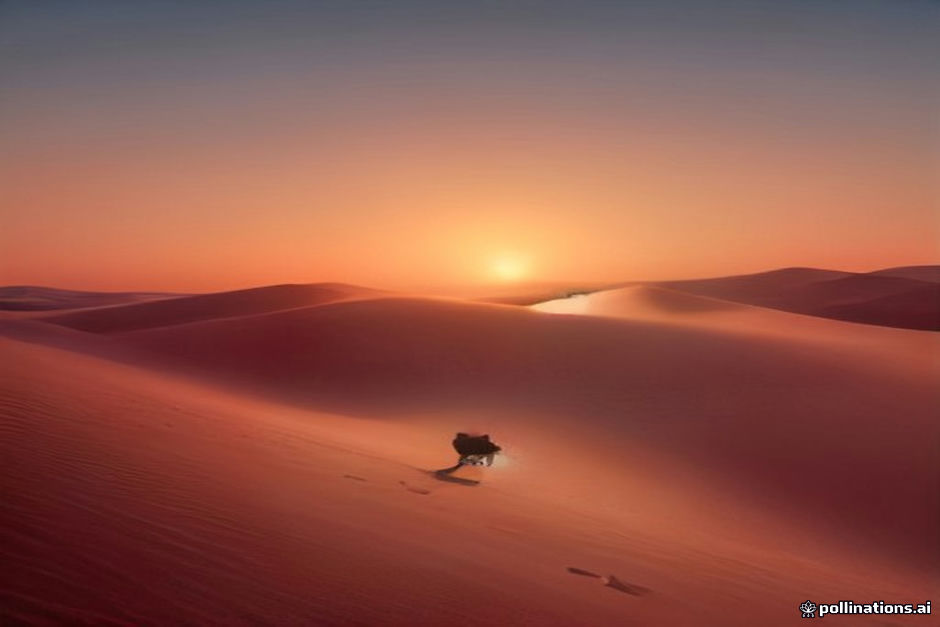
Illustration, not a photograph — for the real thing, you'll have to stand on the ridge yourself.
If you're carrying a camera
Both ends of the day are golden-hour light, but they photograph differently. Sunset gives you the stronger color and the caravan shots — the classic camel-line-at-dusk frame. Sunrise gives you clean compositions: empty dunes, low contrast, and the only footprints in the frame being yours. And if photography is a real priority for you, the hours between them are the best-kept secret — see our guide to photographing the night sky from camp.
So which one is actually better?
For most travelers: sunset for the experience, sunrise for the memory. Sunset is the social, postcard Sahara — and there's nothing wrong with that being the highlight. Sunrise is the one people describe a year later: cold hands, empty dunes, total silence, light slowly pouring over the ridge.
The good news is that the choice is a false one. Both are already built into every overnight route — the only decision is whether that second alarm is worth it. From where we stand, watching travelers come down from the ridge at 07:00 with numb fingers and enormous grins: it is.
Quick answers
A few follow-up questions travelers ask about this.
Do I have to choose between sunrise and sunset on a desert tour?
No — every overnight tour includes both. You arrive at camp in the late afternoon for sunset, and sunrise happens the next morning before you leave. The only choice is which one you get up for.
What time are sunrise and sunset at Merzouga?
It follows the seasons: in summer, sunset is around 19:30–20:00 and sunrise around 06:00–06:30; in winter, roughly 17:30–18:00 and 07:30–08:00. Your guide confirms the exact times each day.
Is it cold at sunrise in the desert?
Yes — the temperature drops fast after dark, and winter mornings at Erg Chebbi can start close to freezing. Bring a proper layer for sunrise even if the afternoon was warm.
Want both built into your route?
Sunset on the ridge and sunrise over empty dunes are standard on every one of our overnight itineraries — no add-ons, no extra cost.
Send an inquiry See the full itinerary